How Solar Powers Income for Nigerian SMEs in 2026
Solar isn't just backup. Here's how Nigerian SMEs use solar to earn more daily through productive use of energy (PUE), and how SunFi makes it affordable.
June 17, 2026 3 minutes
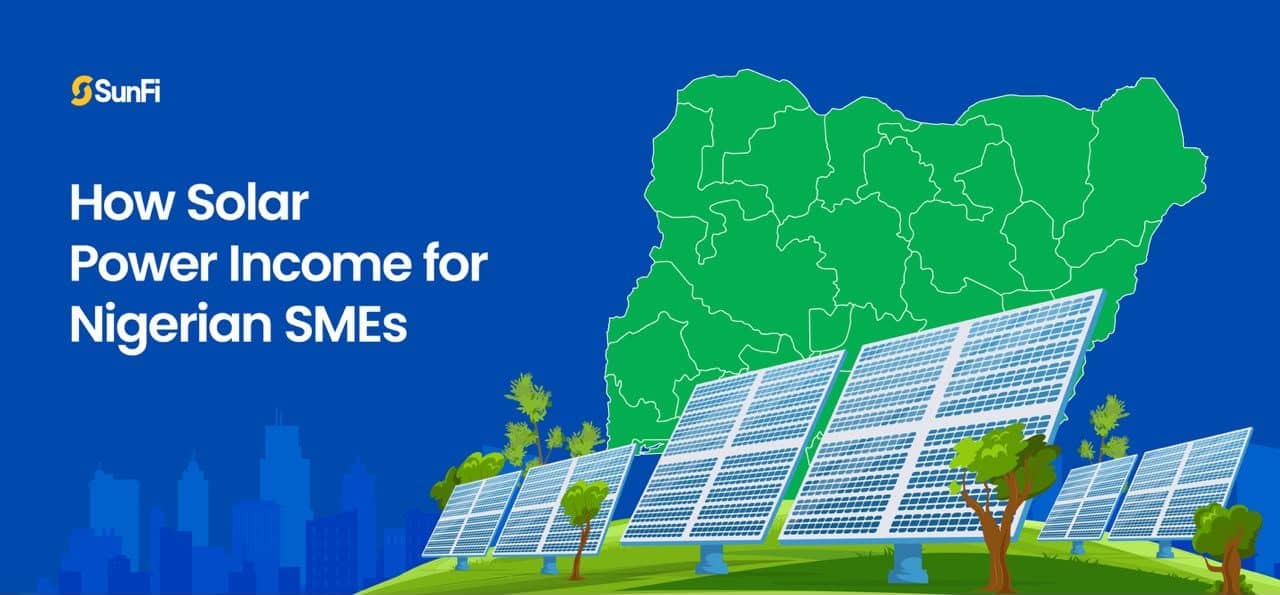
Most Nigerians think of solar as backup power. Something to keep the lights on when NEPA is off. Something to replace the generator at night.
For Nigerian small businesses, solar is something bigger. It is a direct input to how much money the business makes every day.
A cold room runs 24 hours or it spoils its stock. A salon cannot cut hair when the clippers will not turn on. A tailor cannot finish orders when the sewing machine sits idle waiting for power. A cyber cafe cannot serve customers when the laptops are dead.
This is what productive use of energy means in practice. Power is not a comfort. Power is the thing that turns labour into income.
This piece walks through what PUE is, why it matters for Nigerian SMEs in 2026, and how SunFi makes getting solar easy and affordable so any Nigerian business can turn power into progress. Six real business types show how the math actually works.
What Is Productive Use of Energy (PUE) and Why Does It Matter for Nigerian SMEs?
Productive Use of Energy describes power used to generate income, not just power used for comfort or lighting.
For Nigerian SMEs, this distinction matters because it changes how you should think about solar spending. A household buying solar is buying comfort and savings. A business buying solar is buying productivity, which means the system should be sized to keep the income engine running, not just to provide backup lights.
PUE also changes the financial conversation. A solar system that costs ₦2 million but enables ₦400,000 of monthly revenue pays back in 5 to 6 months, not 5 to 6 years. Most Nigerian business owners have never run this calculation because nobody has shown them how solar plugs directly into their cash flow.
This is the power for progress angle most Nigerian SMEs miss; solar is not just keeping the lights on. It is the input that lets the business actually grow. And with SunFi financing options for SMEs, the system that powers that growth is finally within reach for every Nigerian business owner.
How Is PUE Solar Different From Home Backup Solar in Nigeria?
Three differences matter.
- Sizing: PUE systems are sized for the peak load when income-generating equipment is running, not just for evening lights. A cold room compressor draws much more power than a ceiling fan. The system has to handle that.
- Battery autonomy: Home systems typically need 1 to 2 days of battery buffer. PUE systems often need 2 to 3 days because losing power during business hours costs revenue, not just convenience.
- Reliability tolerance: A home with a brief power dip is fine. A barbershop with a power dip in the middle of a haircut loses the customer. PUE systems are designed for zero-interruption operation during business hours.
The result: PUE systems are often slightly larger and slightly more expensive than home systems for the same property, but they pay back faster because they are linked to revenue. SunFi makes the upfront cost wall easy to cross through financing options, with monthly payments that fit inside the business's existing cash flow.
Which Nigerian Businesses Benefit Most From Solar PUE in 2026?
The patterns below cover the most common PUE applications across Nigeria in 2026. Each one shows the system size, the income-generating equipment, and why solar is the right answer.
How Do Nigerian Cold Rooms Use Solar to Protect Income?
Cold rooms run 24 hours or the inventory spoils. A small cold room with a 1HP compressor, internal lighting, and a small freezer typically runs 6 to 8 kWh per day, with peak draw of 1.5 to 2.5 kVA when the compressor kicks in.
The financial case is direct. One spoiled freezer of fish in Mile 12 or Oyingbo market can cost a trader ₦200,000 to ₦400,000. Two spoilage events in a year wipe out any diesel savings the trader thinks they are getting.
A 3.5 to 5 kVA solar system with 2 to 3 days of battery autonomy covers cold room operation reliably. SunFi solar financing typically runs less than the diesel spend the trader is already covering, with no spoilage risk attached.
This is SunFi Concierge territory because the financial stakes (cold room inventory) justify professional design and installation. The SunFi Concierge process handles site assessment, system design, and ongoing support so cold room owners can focus on running their trade.
How Do Nigerian Tailors Use Solar to Finish More Orders Every Week?
A typical Nigerian tailor runs one or two sewing machines, an electric iron, a fan, and lighting. Total draw is small in absolute terms, around 1.5 to 2.5 kWh per day, but the income dependency is total. A tailor with no power cannot finish orders, which means cannot collect payment, which means cannot pay rent or restock fabric.
A 1.5 to 2 kVA solar system runs a single-tailor shop comfortably. Workshops with multiple tailors need scaled-up capacity.
The payback math is fast. A tailor who can finish 4 to 6 more outfits per week because the power is steady earns an additional ₦80,000 to ₦150,000 monthly. The solar payment is a fraction of that.
How Do Nigerian Pharmacies and Mini-Marts Protect Inventory With Solar?
Pharmacies need consistent refrigeration for medications, particularly insulin and other temperature-sensitive drugs. Mini-marts and provision shops need refrigeration for cold drinks, frozen foods, and dairy.
A pharmacy fridge plus lighting plus a fan typically draws 4 to 6 kWh per day. A mini-mart with multiple fridges and freezers can hit 10 to 15 kWh.
The risk of losing power is asymmetric. Spoiled medications can carry liability, not just lost inventory. Spoiled drinks and frozen goods are direct revenue loss. Either way, the cost of a power-out hour exceeds the cost of solar by a wide margin.
System sizing depends on the refrigeration load. Small pharmacies and shops manage on 2.5 to 3.5 kVA. Larger mini-marts move into 5 kVA and up. The SunFi system sizing guide walks through how to calculate this for any business.
How Do Nigerian Cyber Cafes and Print Shops Stay Open All Day With Solar?
Cyber cafes, business centres, and print shops have unusual load profiles. Laptops and printers individually draw modest power, but the combined load during peak hours (school assignment season, exam printouts, business registration deadlines) can spike high.
A small cyber cafe with 4 to 6 workstations, two printers, and a router typically runs 5 to 8 kWh per day, with peak draw of 2 to 3 kVA when multiple printers run simultaneously.
The income link is direct. Every hour the shop cannot operate is direct revenue lost, often to a competing shop nearby with steady power.
A 3 to 4 kVA solar system with strong battery backup handles a small cyber cafe. Print shops with heavy-duty printers need slightly more capacity.
How Do Nigerian Agribusinesses Use Solar to Run Borehole Pumps and Protect Stock?
Small-scale poultry farms, fish farms, and crop irrigation businesses depend on water pumps that draw heavy power. A 1.5HP borehole pump can pull 1.5 to 2 kVA running, with a higher startup surge.
For agribusinesses, water is the input to everything else. Chickens need water multiple times daily. Fish ponds need pump circulation. Crops need irrigation cycles.
The cost of losing power is not just one day of revenue. It is potential animal stress, crop yield drops, and sometimes total stock loss. Solar removes this risk entirely.
Solar systems for borehole-driven agribusinesses are typically 5 to 7.5 kVA with strong battery storage. These are Concierge installations because the design must account for the pump's startup surge and the operational profile of the farm.
How Do Nigerian Salons and Barbershops Use Solar to Keep Customers Coming?
Hair salons and barbershops run a mix of equipment. Clippers, hair dryers, blow dryers, fans, lighting, and often a wall-mounted TV for waiting customers.
A single-chair barbershop runs 2 to 4 kWh per day. A multi-chair salon with hair dryers and a wash station hits 6 to 10 kWh, with peak draw of 3 to 4 kVA when multiple dryers run.
The business model depends on power. A salon with no power means no customers, which means no income. The cost of losing one Saturday of customers can exceed a month of solar payment.
System sizing scales with the operation. Single-chair shops manage on 1.5 to 2 kVA. Multi-chair salons need 3.5 kVA and up.
How Quickly Does PUE Solar Pay Back in Nigeria?
Across these six business types, the payback math follows a similar pattern.
The combined monthly spend on diesel, grid tariffs, generator maintenance, and lost income from power downtime typically runs ₦80,000 to ₦300,000 for a small Nigerian SME. A properly sized solar system financed through SunFi options typically costs less monthly than that combined spend.
The difference (which most owners never calculate) is the gap between cash flowing out forever versus cash flowing toward ownership of an asset that lasts 15 to 20 years.
This is Power for Progress in business form. Solar is not a cost. It is the input that lets the business grow.
How Does SunFi Make Getting Solar Easy and Affordable for Nigerian SMEs?
This is the part most Nigerian business owners get stuck on. They know solar is the right answer. They know it pays back. They just do not see how to afford the upfront cost or how to figure out which system fits their business.
SunFi is built specifically to solve this. Here is how SunFi makes going solar easy for Nigerian SMEs.
- Easy financing: SunFi makes it easy to get solar at cheap rates. You can get a pay small small option if you are going for a solar that costs 1 million naira and above. A deposit of 30 to 35%, then monthly payments structured to fit your cash flow. Most Nigerian SMEs find that the monthly pay is lower than what they were already spending on diesel and tariffs. The system becomes affordable from day one.
- Easy sizing: The SunFi energy calculator takes a minute. You list what your business runs, and the calculator tells you what size system fits. No engineering degree required. No guesswork.
- Easy buying: Four paths to fit every type of Nigerian business owner. For small shops and starter setups, the SunFi e-commerce shop ships plug-and-play products to your door. For larger or complex installations, SunFi Concierge handles everything from site assessment to installation. For salary-earning business owners whose employer is a SunFi partner, the Employee Power Programme deducts payments directly from salary. For community-based buyers, a SunFi Agent handles the order locally.
- Easy approval: The financing eligibility check takes 60 seconds. You answer a short set of questions, and the system tells you what deposit and monthly payment combinations you qualify for. No long bank applications. No collateral requirements. No weeks of waiting.
- Easy support: WhatsApp, phone, and email. SunFi handles warranty claims directly so business owners do not deal with manufacturer paperwork. Post-installation support runs continuously.
This is the whole point of SunFi. We make going solar in Nigeria easy, affordable, and trustworthy, so every Nigerian business owner can turn power into progress without the upfront cost wall stopping them.
How Do I Size and Finance PUE Solar for My Nigerian Business?
Three steps:
- Step 1: List your income-generating equipment. Cold room compressor, sewing machine, clippers, fridge, water pump, computers, whatever drives your revenue.
- Step 2: Calculate peak load and daily kWh. Peak load determines inverter size. Daily kWh determines battery and panel sizing. The SunFi system sizing guide walks through this in detail.
- Step 3: Choose your buying path with SunFi buying options.
For salary-earning business owners: the Employee Power Programme if your employer is a SunFi partner
For larger businesses, cold rooms, and complex setups: SunFi Concierge handles design, installation, and financing in one engagement
For SMEs in your community: a SunFi Agent near you
This is the SunFi vision for clean energy across Nigerian businesses: every income-generating activity in Nigeria running on clean power, financed in ways that fit how Nigerian businesses actually operate. SunFi makes it easy and affordable. You make it happen.
Ready to Turn Your Business Power Into Income?
Chat with a SunFi Agent on WhatsApp for a recommendation tailored to your business.
Or use the SunFi energy calculator at sunfi.co to estimate your system size and monthly payment in under a minute.
Or call: 02018871099

Henry Adepegba
ABOUT AUTHOR
SEO Associate
Leave a Reply
Your email address will not be published.