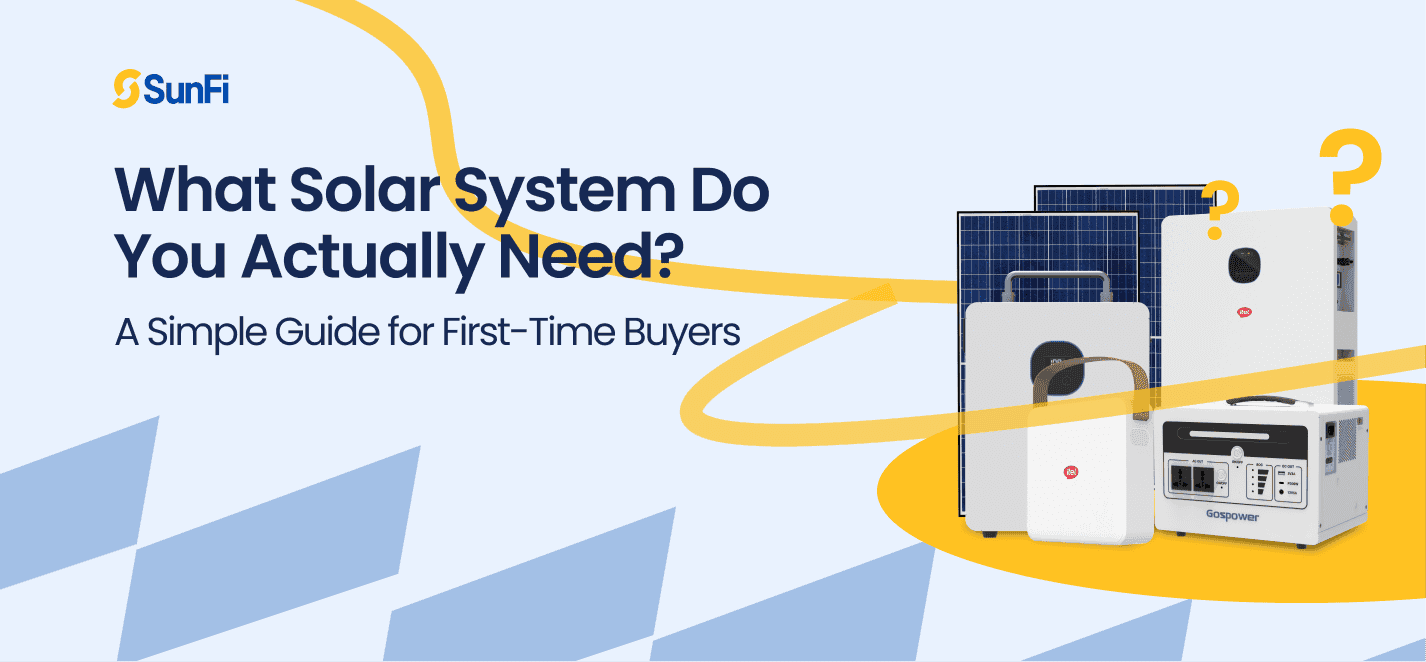
What Solar System Do You Actually Need? A Simple Guide for First-Time Buyers
Not sure which solar system is right for your home? This simple guide breaks it down for first-time buyers—helping you understand your energy needs, choose the right system, and make a smart, cost-effective decision without the confusion.
March 25, 2026 3 minutes

Power outages have become part of everyday life for many Nigerian homes and businesses. From interrupted work calls to dead phones, heat, and dark rooms at night, unreliable electricity can quickly turn a normal day into a frustrating one.
For many people, solar power feels like the obvious solution. But once you start looking into it, the options can quickly become overwhelming.
Should you buy a portable power station? A larger backup system? Or a full home installation that runs everything?
The truth is, the right solar system depends on what you actually need to power and how you actually live. There's no single "right" size for every Nigerian home. There's a right size for your home.
Here's a simple guide to help first-time buyers find the solar solution that fits.
Start with What You Want to Power
The first step to choosing the right solar system is understanding your everyday power needs. Ask yourself a few simple questions:
Do you mainly need to charge phones, laptops, and small devices?
Do you want to run fans, routers, and lights during outages?
Do you need a stronger backup that handles multiple appliances, your iron, pumping machine, fridge, or freezer?
Or do you want a full system that powers your whole home like a backup grid?
Your answers point to one of three solar tiers: portable power, medium home backup, or full home solar. Each tier has its own price range, capability, and ideal buyer. Let's walk through each one.
Tier 1: Portable Power for Everyday Use
If your biggest concern is keeping your devices charged and staying connected during outages, portable plug-and-play systems are usually more than enough.
Solutions like the itel PowerGo and the ColaSolar 1000 Pro are designed for essentials — phones, laptops, routers, and small accessories. They're lightweight, plug-and-play, and easy to carry with you.
These portable systems typically handle smaller loads (lights, fans, TV, phone charging, laptop use) for several hours on a single charge. They're especially useful for:
Remote workers and freelancers
Students preparing for exams
Small business owners running shops or kiosks
People who travel frequently
Anyone living in a rented apartment where installation isn't possible
Instead of worrying about NEPA returning or how much fuel is left in the generator, you simply plug in and keep going. These systems are also affordable enough that many first-time buyers start here, then upgrade as their needs grow.
Tier 2: Medium Home Backup
Sometimes, charging devices isn't enough. You may want something that keeps the lights on, runs fans, charges multiple devices, and powers your fridge during longer outages.
This is where larger plug-and-play systems like the Itel Power Tank and the EcoFlow River 2 Max come in. These systems offer more capacity, allowing you to power multiple devices and small appliances for longer periods.
They're ideal for:
One or two-bedroom apartments
Small offices and workspaces
Homes that mostly need backup for evening hours and outage spells
Anyone who wants reliable power without installing a full solar system
The best part is most of these systems are designed to be simple; you take them out of the box, plug them in to charge, and they're ready to use. No installer required, no roof modifications, no permits.
For most apartment dwellers and small households, this is the sweet spot, enough power to make daily life smooth, without committing to the full installation effort of a larger setup.
Tier 3: Full Home Solar Systems
For larger homes; three bedrooms and up, especially homes running multiple fans, fridges, washing machines, water pumps, or air conditioning, you'll want a fully installed home solar system.
The Itel 3.6KVA Solar Power System is one of the most popular options in this range. It's designed for medium Nigerian homes and handles the kind of load most three-bedroom households actually run; lights, fans, TV, fridge, washing machine, occasional iron, water pump.
For larger homes with AC and heavier loads, the system needs to scale up, typically 5kVA or larger, with battery capacity sized for several days of autonomy. This is where a conversation with a SunFi advisor matters most, because the design has to match how your home actually uses power.
And yes, a properly designed home solar system works reliably during Nigeria's rainy season. That's one of the most common concerns first-time buyers raise, and it's worth answering directly: rain doesn't stop your panels. A properly sized battery handles the cloudy stretches.
"But I Can't Afford a Solar System Right Now"
Here's the part that changes the whole conversation.
You don't need to pay for a solar system upfront. Whether you're starting with a portable system or going for a full home setup, SunFi's financing options let you pay small small over 12 to 24 months.
This is essentially solar with a pay-as-you-go approach:
Pay a small deposit to get started
Spread the rest over manageable monthly payments
Use the system fully throughout the payment period
Own it outright at the end of the term
Many SunFi customers find that their monthly solar payment is actually less than what they were already spending on generator fuel and Band A electricity bills combined. So instead of money disappearing into fuel and tariffs every month with nothing to show for it, that same money builds toward something you'll own for the next 15 to 20 years.
For first-time solar buyers, this changes the question entirely. It's no longer "Can I afford solar?" It's "Which payment plan fits my monthly cash flow?"
Three Solar Sizing Mistakes to Avoid
Whatever tier you choose, three common mistakes catch out first-time buyers. Worth knowing before you commit.
- Sizing for sunny days only
A system that just barely covers your average day will fail during the difficult week of rainy season. Always plan for three cloudy days in a row, not the perfect Tuesday.
- Forgetting peak load
Your system has to handle every appliance running at once, not just the average daytime draw. If your iron, kettle, and fridge can all be on simultaneously, the system needs to handle that combined wattage without tripping.
- Letting price lead the conversation
People often size down to hit a budget, then end up frustrated when the system can't keep up. Right-size the system for what you actually need, then use SunFi's pay-small-small financing to make the cost manageable monthly.
Choose a System That Fits Your Lifestyle
Solar power doesn't have to be complicated. In fact, the best system is usually the one that fits naturally into your everyday routine.
Some people start with portable systems they can carry anywhere, then upgrade to home backup once they see how much easier life gets. Others jump straight to a full home setup because they know what their household actually needs.
With today's plug-and-play solutions and pay-small-small financing, you can start small and grow into it, or commit fully from day one. Either path works. The wrong move is to keep waiting until you've "figured it all out."
If you're feeling overwhelmed by the choices, our beginner's guide to solar in Nigeria walks through the basics in even more detail, from how solar actually works to what to expect in your first month of ownership.
Whether you're working from home, studying, running a small business, or simply enjoying quiet evenings without generator noise, having consistent power makes life easier in ways you only notice once you have it.
Because when you choose the right solar solution, power becomes one less thing to worry about.
Ready to Find the Right Solar Solution for You?
Explore our range of plug-and-play power systems and find the one that fits your everyday needs.
Or chat with a SunFi Rep for a quick recommendation based on your specific home or situation.


Leave a Reply
Your email address will not be published.