Does Solar Really Work During the Rainy Season in Nigeria?
Solar panels generate electricity from daylight, not just direct sunlight. Even during Nigeria's six-month rainy season, a properly sized solar system with quality battery storage delivers consistent power. Here is exactly what to expect from your solar system during overcast months, common rainy season problems and how to avoid them, plus practical tips to maximise performance when the clouds roll in
April 23, 2026 3 minutes
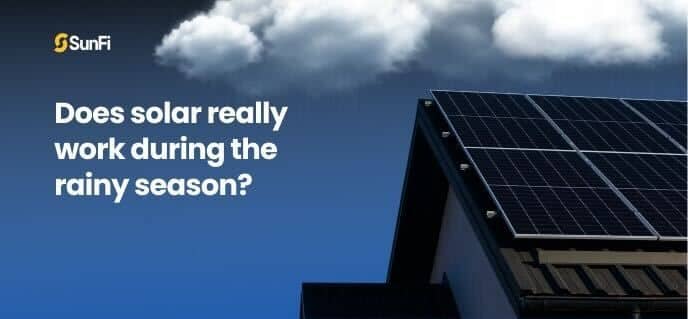
"What happens when there's no sun?"
If you've ever considered going solar in Nigeria, you've probably asked this question. Will your solar panels still work during the rainy season when cloudy skies block the sun for days?This is one of the most common concerns about solar in Nigeria.
It's a fair concern.
The rainy season in Nigeria typically runs from April to October, bringing weeks of overcast skies, reduced sunlight hours, and heavy downpours. Lagos, Port Harcourt, and other southern cities can experience up to 200 rainy days per year.
So naturally, you want to know if solar is worth the investment when half the year looks like this.
Let's clear up the confusion with facts.
How Solar Panels Actually Generate Electricity
Here's something most people get wrong: solar panels do not need direct sunlight to produce electricity.
Solar panels generate power from daylight, not just sunshine, which is why solar remains a reliable power source even during overcast conditions. The photovoltaic cells in your panels respond to light particles called photons, which are present even on cloudy and overcast days.
On a cloudy day, your solar panels will still produce electricity, typically between 10% to 25% of their rated capacity depending on cloud thickness. This means a 5kW system might generate 500W to 1.25kW even when the sky is grey.
Heavy rain clouds reduce output more significantly, but your panels never stop working entirely during daylight hours.
Related: Many Nigerians believe solar doesn't work without bright sunshine. Here are other solar energy myths we've debunked.
Why Solar Systems Work Reliably All Year Round
A properly designed solar system is not built for perfect weather only. It's engineered for Nigerian conditions, including our six-month rainy season.
Here's what makes the difference between a system that struggles and one that performs consistently:
Battery Storage Capacity
Your solar battery is your rainy season insurance.
During sunny days, your panels generate more electricity than you use. The excess charges your battery bank. When clouds roll in or night falls, your battery powers your home using that stored energy.
A quality lithium-ion battery can store enough power to run your essential appliances for 12 to 48 hours without any sunlight, depending on your system size and usage. The prices for these batteries vary, but flexible payment options make quality batteries more accessible.
Proper System Sizing
This is where many solar installations fail.
Your system should be sized based on your actual daily consumption plus a buffer for low-production days. A qualified installer will calculate your needs and recommend a system that accounts for rainy season reductions.
Not sure what size you need? Find out what solar system you actually need based on your household consumption.
Quality Panel Efficiency
Not all solar panels perform equally in low-light conditions.
Monocrystalline panels, which are the type used in quality installations, have better low-light performance than cheaper polycrystalline alternatives. They capture more energy from diffused light on cloudy days.
Correct Installation Angle
Panels installed at the optimal angle for your location capture maximum available light throughout the day, even when that light is diffused through clouds.
In Lagos (latitude 6.5°N), panels should be tilted at approximately 6 to 10 degrees facing south for optimal year-round performance.
What Actually Happens to Your Solar System During Rainy Season
Here's a realistic picture of solar performance during Nigeria's wet months:
Your Panels Continue Generating Power
Even on the cloudiest days, your panels produce electricity from dawn to dusk. Production drops but never stops completely.
A typical day during rainy season might look like this:
- Morning (cloudy): 15% of rated capacity
- Midday (light rain): 10% of rated capacity
- Afternoon (clouds clearing): 40% of rated capacity
That's still meaningful electricity generation adding to your battery reserves.
Your Battery Handles the Heavy Lifting
This is exactly what your battery system is designed for.
On sunny days, your system stores excess energy. During extended cloudy periods, that stored energy powers your home. A well-sized battery bank ensures you have consistent power even if clouds persist for several days.
You Still Have Reliable Electricity
A properly designed system accounts for seasonal variations. Your installer should have calculated your needs based on worst-case scenarios, not best-case sunny day projections.
The result? Your power stays stable regardless of weather changes.
Related: Here's what a full day looks like when you're not dependent on the grid.
Common Rainy Season Solar Problems (And How to Avoid Them)
Some solar users do experience issues during rainy season. But as we've covered in our breakdown of common solar problems in Nigeria, the issue is rarely with solar technology itself. It's usually one of these:
Undersized Battery Bank
If your battery runs flat during cloudy periods, your system was not properly sized for your needs. This is an installation and planning error, not a limitation of solar technology.
Poor Quality Components
Cheap panels with low efficiency ratings struggle in anything less than bright sunshine. Investing in quality monocrystalline panels pays off during the rainy season.
Incorrect Installation
Panels installed at wrong angles, shaded by trees, or facing the wrong direction will underperform year-round but especially during low-light conditions.
Lack of Maintenance
Dust, debris, and bird droppings reduce panel efficiency. Regular cleaning ensures maximum light absorption even on cloudy days.
Tips to Maximise Solar Performance During Rainy Season
Here's how to get the most from your system when the clouds roll in:
- Keep your panels clean: Rain helps wash away dust, but check for debris after storms.
- Monitor your battery levels: Know your reserves so you can adjust usage on extended cloudy days if needed.
- Prioritise essential loads: During prolonged low-production periods, focus power on critical appliances like refrigerators, lights, and phone charging.
- Schedule high-consumption activities: Run washing machines, iron clothes, and charge devices during midday when production is highest, even on cloudy days.
- Ensure proper ventilation: Batteries perform better in cool conditions. Good airflow around your battery bank improves efficiency.
The Real Question You Should Ask
The issue is not whether solar works during the rainy season. It does.
The real question is: Is your system properly designed to handle it?
A quality solar installation from a reputable company accounts for Nigerian weather patterns. It includes adequate battery storage, efficient panels, and correct sizing for your household needs.
When your system is built right, you get:
- Consistent power regardless of weather changes
- No panic when it's cloudy for days
- No extra costs to "compensate" for rain
- Peace of mind all year round
New to solar? Start with our beginner's guide to solar energy in Nigeria.
The Bottom Line
Yes, solar works during the rainy season in Nigeria.
Not just "a little." Not "sometimes."
It works reliably when your system is properly designed, correctly sized, and professionally installed. And for those just starting their research, our beginner's guide to solar in Nigeria covers everything you need to know.
The difference between a system that struggles and one that performs consistently comes down to quality components, adequate battery storage, and expert installation.
So the question isn't whether solar works in the rain. It's whether you're getting your system from people who know what they're doing.
Ready to Go Solar Without Rainy Season Worries?
Get a system designed for Nigerian weather, including six months of rainy season.
View our solar systems and pricing →
Have questions about sizing, batteries, or installation? Chat with a SunFi advisor on WhatsApp →
Or call us directly: 0201 330 6111

Henry Adepegba
ABOUT AUTHOR
SEO Associate
Leave a Reply
Your email address will not be published.