Why Solar Cable Size Matters for Your Solar System
Learn why solar cable size matters, what happens when the wrong cables are used, and what to ask your installer before setting up solar
October 29, 2026 3 minutes
What Does Solar Cable Size Mean?
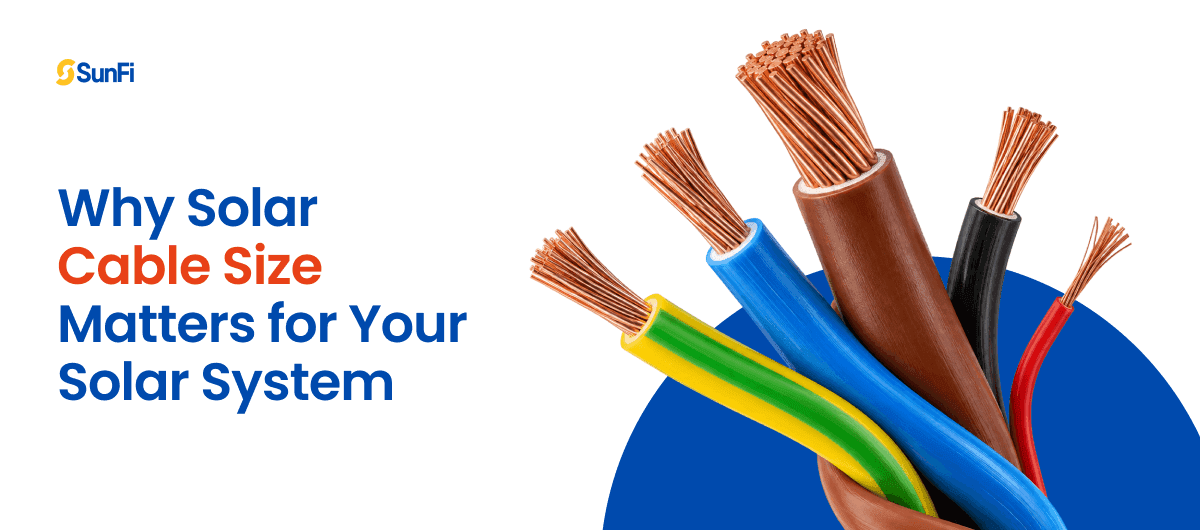
Solar cable size refers to the cross-sectional area of the metal conductor inside a cable, measured in square millimetres (mm²). Common sizes include 2.5 mm², 4 mm², 6 mm² and 10 mm².
Think of a cable like a road. A narrow road may struggle with heavy traffic, while a wider road can handle more. Similarly, a cable needs to be the right size to carry the electrical current required for its job.
But not every connection needs the same cable size. The cable connecting solar panels to an inverter may have different requirements from the one connecting a battery to an inverter.
The key is to use the right cable for each connection.
What Happens When You Use the Wrong Solar Cable Size?
Using a cable that is too small for its application can cause three problems.
- Overheating: If too much current passes through a cable under its installation conditions, it can become excessively hot. This may damage the insulation and increase the risk of an electrical fault or fire.
- Voltage drop: Some voltage is lost as electricity travels along a cable. If the drop is too high, connected equipment may not receive the voltage it needs to operate properly.
- Energy losses: Some electrical energy is converted into heat as current passes through a cable. Longer cables and smaller conductors can increase these losses.
These problems depend on the cable, the electrical load and the installation conditions. The important thing is to ensure that every cable is suitable for the circuit it serves.
What Determines the Right Solar Cable Size?
Four main factors help determine the appropriate cable size.
- How Much Current the Cable Carries
Different parts of a solar system carry different amounts of current.
For example, the cable connecting a battery to an inverter may have different requirements from the cable connecting solar panels to the inverter.
The installer needs to consider the equipment specifications and the expected current in each circuit. The inverter's power rating alone is not enough to determine the size of every cable.
- The Distance Between Equipment
The longer a cable is, the greater its electrical resistance will generally be for the same conductor material and size.
This can increase voltage drop and energy losses.
For example, the cable running from rooftop solar panels to an inverter may be much longer than the connection between an inverter and a nearby battery. The installer must account for these distances when selecting cable sizes.
- Where the Cable Will Be Installed
A cable's safe current-carrying capacity depends on more than its thickness.
Factors such as conductor material, insulation rating, temperature and installation method affect how much current it can safely carry.
Outdoor cables must also be suitable for their environment, including exposure to sunlight, moisture and physical damage where applicable.
Using a cable that is not designed for its installation conditions can affect its safety and durability.
- The Equipment Being Connected
Solar panels, batteries, inverters and household electrical circuits have different wiring requirements.
Each cable must have the appropriate conductor size, voltage rating and insulation for its intended use. Connectors and terminals must also be compatible with the cable and equipment.
A qualified installer should select cables according to the system design, manufacturer instructions and applicable electrical requirements.
Is a Bigger Solar Cable Always Better?
Not necessarily.
A larger conductor can reduce electrical resistance, but choosing the biggest cable available does not automatically make an installation safer or better.
The cable must still fit the equipment's terminals and connectors, and the installation must meet the relevant electrical requirements.
Cable quality, suitable connectors and secure connections matter just as much as choosing the correct conductor size.
The goal is not to use the biggest cable. It is to use the right cable for the job.
What Should You Ask Your Solar Installer?
You don't need to calculate cable sizes yourself. However, asking a few questions can help you understand whether cable selection has been properly considered.
- How did you determine the cable sizes? Your installer should be able to explain the factors considered for the different connections.
- Are the cables suitable for their locations? Ask how outdoor wiring will be protected against environmental exposure and physical damage.
- Have you accounted for cable length? Longer cable runs can increase voltage drop and affect the required conductor size.
- Are cables and connectors included in the quotation? Confirm which materials and installation work the quoted price covers.
- How will the wiring be checked before handover? Ask what inspections and electrical tests will be performed to confirm that the installation is safe.
Be cautious if an installer chooses cables solely because they are cheaper or cannot explain why the selected sizes are suitable for your system.
Frequently Asked Questions
- What cable size do I need for my solar system?
There is no single cable size that works for every solar installation. The right size depends on the current, cable length, conductor material, installation conditions and equipment requirements. Your installer should assess each circuit before selecting a cable.
- Can I use the same cable size throughout my solar installation?
Not necessarily. Different connections may carry different currents, have different cable lengths or operate under different conditions. They may require different cable sizes.
- Can the wrong cable size affect solar performance?
Yes. An unsuitable cable can increase voltage drop and energy losses. If it cannot safely carry the required current, it may also overheat and create a safety risk.
Planning a Solar Installation? Speak With SunFi
Choosing a solar system involves more than comparing panel capacity, inverter ratings and battery size. The cables and connections must also be suitable for the equipment and installation.
If you're considering solar for your home or business, speak with SunFi about your electricity needs and available options. Before proceeding, confirm what the installation service includes and how the system's wiring requirements will be addressed.
Ready to discuss your solar requirements? Contact SunFi on WhatsApp or call 0201 887 1099 to get started.

Henry Adepegba
ABOUT AUTHOR
SEO Associate

Leave a Reply
Your email address will not be published.