Why Is My Solar Not Charging? Simple Causes and Fixes.
Solar not charging as it should? Here's how to get your system back to full power, and keep it there, with simple checks any Nigerian home can do.
September 14, 2026 3 minutes
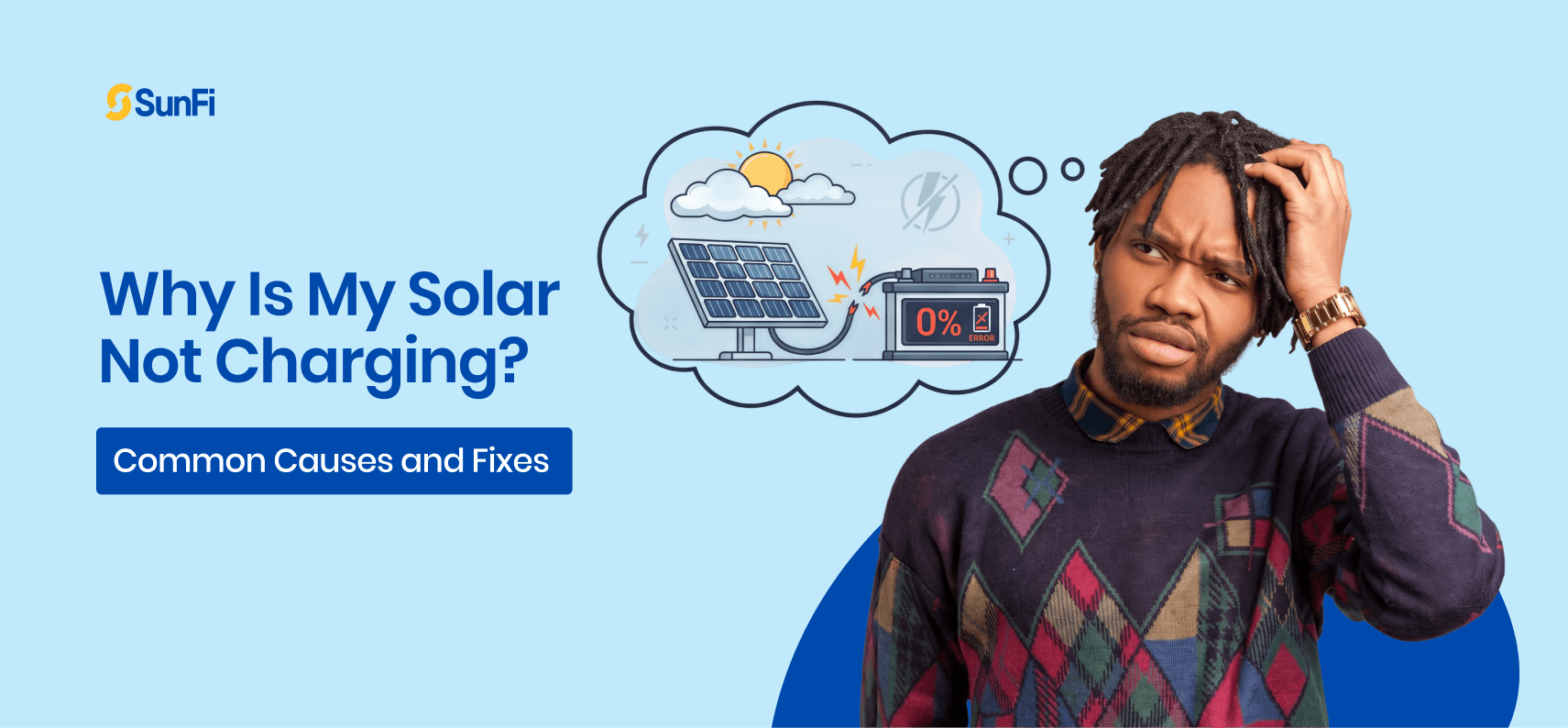
Solar systems are quickly becoming one of the most popular alternatives to Nigeria’s unreliable electricity supply. These days, it’s hardly unusual to spot solar panels on the roof of a home, office, or business. For many Nigerians, going “off the grid” has even become an aspiration, a way to take back control of their power supply.
But as more people make the switch to solar, many are still learning how to maintain and troubleshoot their systems. One common issue is finding that your solar system isn’t charging as it should.
The good news? It doesn’t necessarily mean your system has failed.
In most cases, poor or slow charging can be traced to one of four things: dusty or shaded panels, an ageing battery, a loose connection, or a tripped breaker. Solar systems rarely stop working without warning; they often give you signs first, and most charging problems have a straightforward solution.
Here’s how to identify what’s holding your system back and what you can do to get it charging properly again.
Why Would a Solar System Stop Charging Fully?
A solar system charges by turning sunlight into stored power. Anything that gets between the sun and your battery, or weakens a link in that chain, shows up as slower or lower charging. The causes are usually simple, and you can check most of them yourself in a few minutes.
- Your panels are dusty or shaded.
This is the most common reason, and the easiest to fix. Panels work by catching sunlight, so a layer of dust, especially during harmattan, quietly blocks part of that light. It adds up more than people expect: studies have found that dust build-up can cut a panel’s output by as much as 15–25%, and even higher when panels go a long time without cleaning. Shade does the same thing. A tree branch, a water tank, or a neighbour’s extension throwing a shadow across your panels at midday can pull your charging right down. Since most panels are mounted on the roof, a clean is best arranged with your installer or a technician rather than attempted yourself. Having them clear off the dust, and check that nothing new is shading the panels, often recovers most of your lost charge straight away.
- Your battery is getting old or has been run down too often.
Batteries do not last forever, and a tired one holds less charge than it used to. If your panels are clean and your system still fills up slowly or drops fast, the battery may be nearing the end of its cycle life as designed by the manufacturer. This is normal, and it is worth knowing the signs so you can plan ahead rather than be caught off guard. Our guide on how to know when a solar battery needs replacing walks you through it.
- A cable or connection has come loose.
Your panels stay outdoors all year, taking on sun, rain and heat, while the inverter and battery are often kept indoors, depending on your home. Over time, and especially out in the weather, a cable or solar terminal can work itself loose, which can slow your charging or stop it entirely.
If everything else looks fine, it is worth having the connections checked and tightened, ideally by the initial installer.
- A tripped breaker or switched-off charge controller
Sometimes the system has simply protected itself. A breaker can trip after a power surge, or the charge controller can shut off if it senses a fault. The fix can be as simple as resetting the breaker or the controller. If it trips again right away, that points to something worth having a professional look at rather than resetting repeatedly.
How Do You Get Your Solar Charging at Full Power Again?
Once you know the usual suspects, getting back to full charge is mostly a matter of checking them in order, from the easiest to the most involved.
- Start with the panels.
Since panels are usually roof-mounted, and require technical expertise, call your installer to clean off any dust and check that nothing new is shading them. This is often all it takes to restore lost charge, and it keeps everyone safe, no climbing required.
- Watch how the system behaves over a full sunny day.
If clean panels charge well on a bright day but the charge disappears quickly at night, that points to the battery rather than the panels. If it still charges slowly even in full sun, the issue is more likely on the panel or connection side.
- Check the simple electrical things.
Look at whether a breaker has tripped and reset it once. Glance at your charge controller or inverter display for any warning light or code. These small checks often reveal the problem without any tools at all.
- Call in help for anything electrical you are unsure about.
Just as cleaning panels requires carefulness and expertise, opening up wiring or handling battery connections requires the service of a technician, a quick visit from a professional will find the fault faster and more safely than guessing.
The reassuring part is that a solar system rarely fails outright. It gives you clear signs, and most of them lead to a simple fix. Catching them early means you spend far less time thinking about power, and far more time enjoying the freedom your system was meant to give you.
Frequently Asked Questions
- Can my solar still charge on a cloudy or rainy day?
Yes, but more slowly. Panels still capture light on overcast days, just less of it, so charging is reduced rather than stopped. A healthy battery helps here, storing enough on bright days to carry you through the dull ones.
- Why is my solar charging slowly even when the sun is out?
If the sun is strong but charging is still slow, the usual culprits are a thin layer of dust on the panels, a shadow falling across them at some point in the day, or a weak connection between the panel and the battery. Clean the panels first, then check for new shade before looking further.
- How do I know whether it's my panel or my battery causing the problem?
Watch the system over one full sunny day. If clean panels charge well but the power drains fast after dark, the battery is the likely issue. If it charges slowly even in strong sun, the problem is more likely on the panel or connection side.
- How often should I clean my solar panels in Nigeria?
A light clean every few weeks is a good habit, and more often during harmattan when dust settles quickly. Clean in the cool early morning or evening, using water and a soft cloth or brush, never in the harsh midday sun.
- Is it safe to keep resetting a breaker that trips?
Resetting it once is fine. But if it trips again, don't keep forcing it back on. That repeated tripping usually means there's a fault, and it's safer to have a technician check it.
- Take care of your system so it keeps giving you its best
A little attention goes a long way with solar. Clean panels, a healthy battery and tight connections keep your system delivering the steady, quiet power you bought it for.
If you've worked through these checks and your solar still isn't charging as it should, you don't have to figure it out alone, we can take a proper look for you.
Call a SunFi representative on 02018871099 OR chat via whatsapp to request a check on your solar system, and our team will help identify what's holding it back and get it working the way it should.

Henry Adepegba
ABOUT AUTHOR
SEO Associate
Leave a Reply
Your email address will not be published.