Does Your Solar Provider Offer Installation and After-Sales Support?
Find out what good solar installation and after-sales support should include before choosing a solar provider in Nigeria.
October 20, 2026 3 minutes
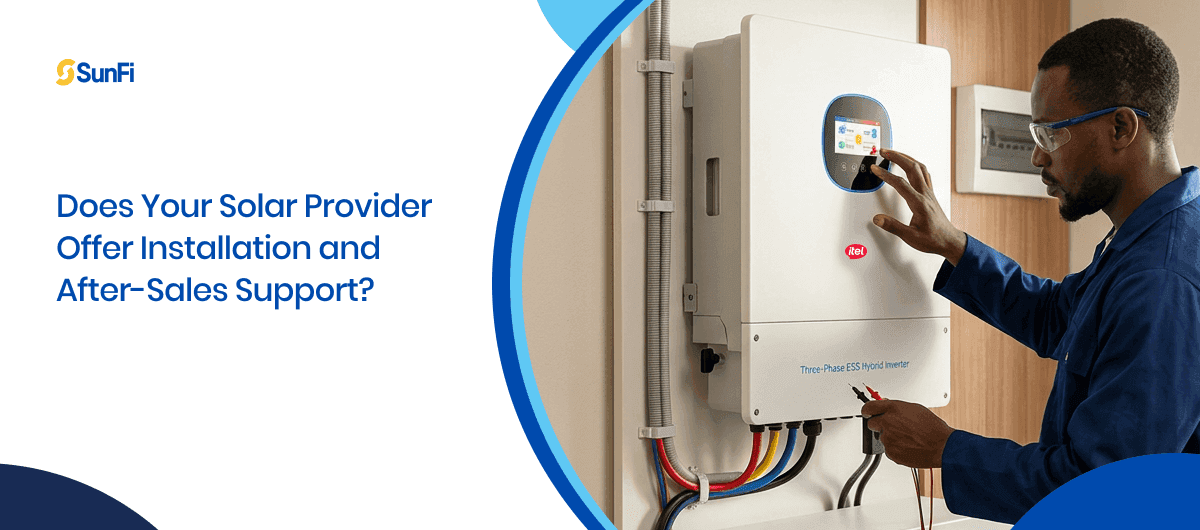
Buying a solar system is a significant investment, but getting the equipment is only part of the process. You also need to know who will install it, what happens if something goes wrong and whether you can still reach the provider months after your purchase.
For many Nigerians considering solar, this is a genuine concern. A provider may be responsive while trying to close the sale, but what happens when your inverter displays an error, your battery is not performing as expected or you need help with your system?
A reliable solar provider should support you beyond the point of sale. This includes helping you get the system installed correctly, providing guidance after installation and giving you a clear way to get assistance when you need it.
But what exactly should you expect from a provider?
This guide explains what good solar installation and after-sales support in Nigeria should look like and the questions to ask before you buy.
What Should Solar Installation and After-Sales Support Look Like?
A good solar provider should be involved throughout the process, not just when you are making your payment.
Here are some of the things to look for:
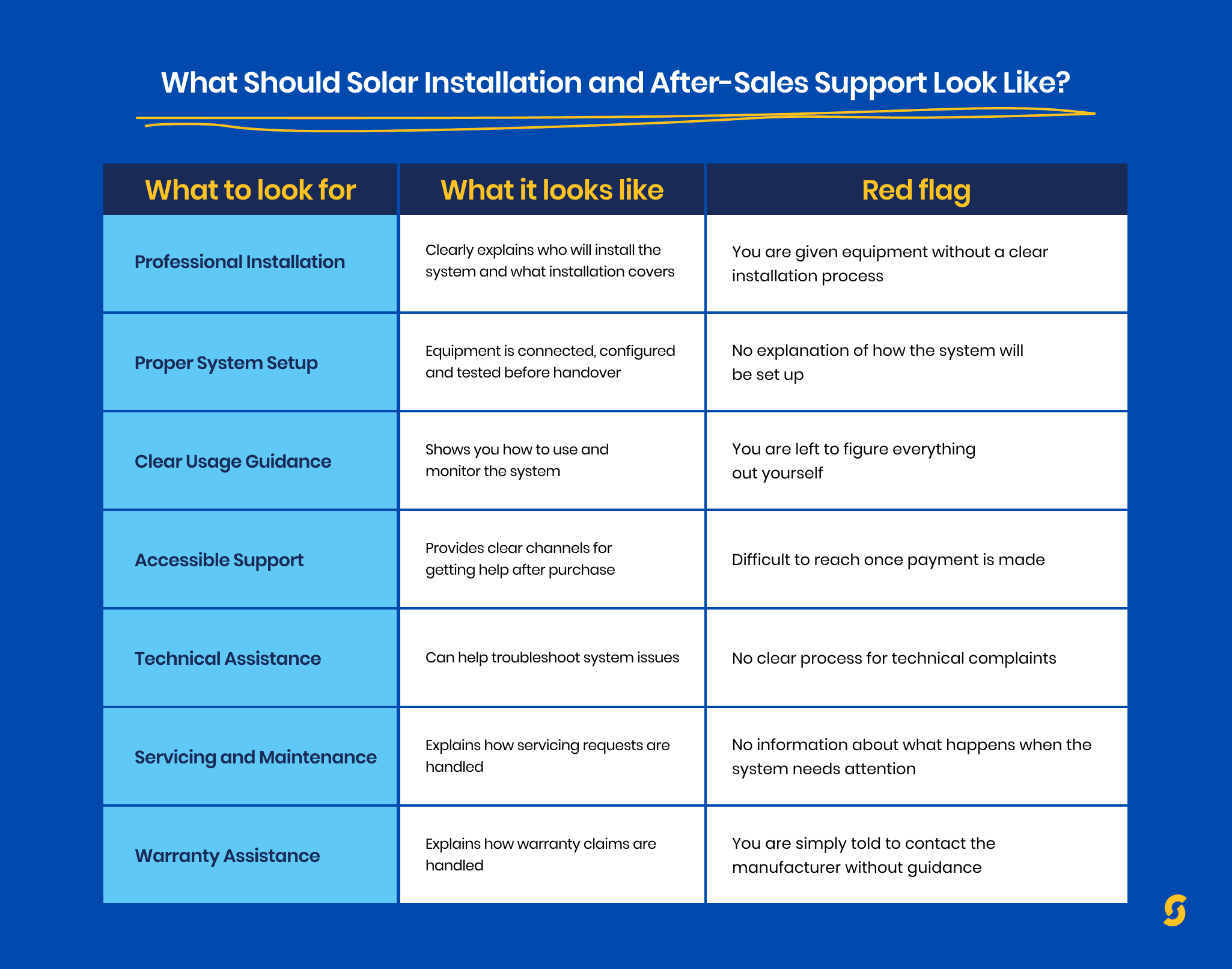
The sections below explain what each of these areas means for you as a solar buyer.
- Find Out Who Will Install Your Solar System
Installation involves more than placing solar panels on a roof. Depending on the system, it can involve connecting the inverter and battery, installing solar panels, integrating the system with the property's electrical setup and configuring the equipment.
Before paying, ask:
- Is installation included in the price?
- Who will carry out the installation?
- What exactly does the installation cover?
- Will the system be tested after installation?
- Will someone explain how to operate the system?
Getting clear answers helps you understand what you are actually paying for and what to expect once the equipment arrives.
- Proper Installation Can Affect System Performance
The quality of the equipment is important, but so is how that equipment is installed.
Poor installation can contribute to electrical faults, safety issues and system performance problems. For example, solar panels need suitable positioning, while batteries and inverters need to be installed in appropriate locations and connected correctly.
A good solar installation service in Nigeria should therefore consider the system as a whole rather than simply connecting individual components.
The provider should also be able to explain what was installed and how the system is expected to operate.
If you are unsure whether a provider's installation process is adequate, ask them to explain what happens from the moment the equipment arrives to the point where the system is ready for use.
- Make Sure You Know What Your System Can Power
Installation should not be separated from the reason you bought the system in the first place.
Before installation, your provider should have already established what you want to power and recommended a system that matches those requirements.
Once the system is installed, you should understand its intended capacity and limitations.
For example, if your system is designed to power your refrigerator, television, fans, lighting and selected appliances, you should know whether running additional high-power appliances could exceed its capacity.
This is why it is important to ask during the buying process:
“What exactly can this system power, and what should I avoid connecting to it?”
A clear answer can help you use the system properly and avoid placing demands on it that it was not designed to handle.
- Ask What Happens After Installation
Installation should not be the point where communication ends.
Once your system is running, you may have questions about its performance or need assistance understanding something you see on the inverter.
For example:
- What does a particular inverter warning mean?
- Why is the battery not lasting as long as expected?
- Is the system charging properly?
- Can another appliance be connected?
- Does the system require servicing?
- What should you do if the system stops working?
This is where solar after-sales support in Nigeria becomes important.
Before you buy, ask the provider:
“Who do I contact if I have a problem after installation?”
You should know whether support is available by phone, WhatsApp, email, in person or through another clearly defined channel.
- Understand the Difference Between Support and Warranty
After-sales support and warranty coverage are related, but they are not the same thing.
Customer support helps you get assistance when you have a question or problem with your system.
A warranty, on the other hand, provides coverage for specific equipment faults or defects under the terms set by the manufacturer or provider.
Before purchasing, find out:
- How long the warranty lasts
- Which components are covered
- What types of faults are covered
- What conditions apply
- Who handles warranty claims
- How you start a warranty claim
Do not assume that every component in your solar system has the same warranty period or coverage.
A provider should be able to explain the relevant warranty terms and help you understand what to do if a covered problem occurs.
- Find Out How Servicing and Maintenance Are Handled
Like other electrical equipment, a solar system may eventually require attention.
You may need technical assistance because of a fault, changes to your energy requirements or an issue affecting system performance.
This is why it is worth asking whether your provider offers access to a solar maintenance provider or technical team when servicing is required.
Ask:
- How do I request servicing?
- Who handles technical issues?
- Is there a separate charge for servicing?
- What happens if a component needs repair?
- Can the provider help if my energy needs change?
You do not necessarily need to expect frequent maintenance. The important thing is knowing where to turn when your system requires attention.
- Test the Provider's Support Before You Buy
One simple way to assess a provider is to experience its customer service before becoming a customer.
Ask a few technical or product-related questions and pay attention to how the company responds.
- Are the answers clear?
- Do they explain things in a way you understand?
- Can you easily reach someone?
- Do they avoid your questions or provide useful information?
You are not necessarily looking for a provider that can promise that nothing will ever go wrong. You are looking for one that has a clear process for helping customers when something does go wrong.
Questions to Ask Before Buying Solar
Before paying for a solar system, make sure you can get clear answers to these questions:
- Is installation included in the price?
- Who will install the system?
- What exactly does installation cover?
- Will the system be tested after installation?
- Will someone explain how to operate the system?
- Who do I contact if I experience a problem?
- What support is available after installation?
- How are servicing requests handled?
- What happens if the inverter or battery develops a fault?
- What does the warranty cover?
- How long does the warranty last?
- Who handles warranty claims?
- Are there additional charges for servicing or repairs?
If a provider cannot clearly explain what happens after you purchase and install your system, take the time to get clarification before committing.
Red Flags to Watch for After-Sales Support
The way a provider handles your questions before purchase can give you some indication of what to expect afterwards.
Be cautious if a provider:
- Cannot explain who will install the system
- Is unclear about what installation includes
- Does not explain what happens after installation
- Has no clear customer-support channel
- Avoids questions about technical assistance
- Gives vague answers about warranty claims
- Cannot explain how servicing requests are handled
- Becomes difficult to reach during the buying process
- Tells you to contact the manufacturer for every issue without explaining its own role
- Makes promises about support without documenting the relevant terms
One issue does not automatically mean a provider is unreliable. However, several unanswered questions should make you pause before making a major purchase.
Why After-Sales Support Matters
A solar system is not a one-time-use product. You will continue using the equipment long after the payment and installation are complete.
That means your relationship with the provider can matter just as much after the sale as it did before it.
Good solar installation and support in Nigeria can give you a clear path when you need help, whether that means understanding your system, troubleshooting an issue, requesting servicing or getting assistance with a warranty claim.
The goal is not to find a provider that promises that you will never experience a problem. It is to choose one that has a clear process for helping you when you do.
How SunFi Supports Customers Beyond the Sale
At SunFi, the solar buying experience goes beyond supplying equipment.
For applicable solar solutions, SunFi supports customers with professional installation and assistance after purchase, helping customers get their systems set up and access support when they need it.
- Professional Installation
For applicable solar solutions, SunFi provides professional installation to help customers get their systems properly set up and ready to use.
- Support After Purchase
Customers can contact SunFi through its available support channels when they need assistance after purchasing a system.
- Access to Technical Assistance
If you experience an issue with your system, SunFi provides a channel through which you can seek assistance rather than being left to figure out the problem on your own.
- Physical Locations
SunFi's physical presence also gives customers another way to interact with the company. Customers can visit SunFi locations to discuss their energy needs and explore available solar solutions.
If you are unsure what type of system you need, you can also speak with the SunFi team before making a purchase.
Choose a Solar Provider That Stays With You
Choosing a solar provider should not end with comparing inverter capacity and prices.
Ask what happens after you pay.
Who installs the system? How will it be tested? Who do you contact when something goes wrong? How are servicing and warranty issues handled?
Getting clear answers to these questions can help you choose a provider that supports you beyond the initial purchase.
If you are still comparing providers, read our guide to choosing the best solar provider in Nigeria to see the other factors worth considering before you buy.
You can also explore available products and deals through SunFi Sweet Deals, or contact SunFi if you need help finding a solar solution for your home or business.
Ready to Get a Solar System?
If you are considering solar for your home or business, SunFi can help you find a solution based on your energy needs, the appliances you want to power and your preferred payment option.
Explore SunFi's available solar solutions or speak with the SunFi team to understand your options, get help choosing the right system and get started with installation.
Call 0201 887 1099 or reach out to SunFi on WhatsApp to get started.

Henry Adepegba
ABOUT AUTHOR
SEO Associate
Leave a Reply
Your email address will not be published.