Lithium vs Lead-Acid Batteries: Which Is Right for You?
Compare lithium and lead-acid solar batteries to understand their lifespan, maintenance, performance and which is best suited to your energy needs.
August 31, 2026 3 minutes
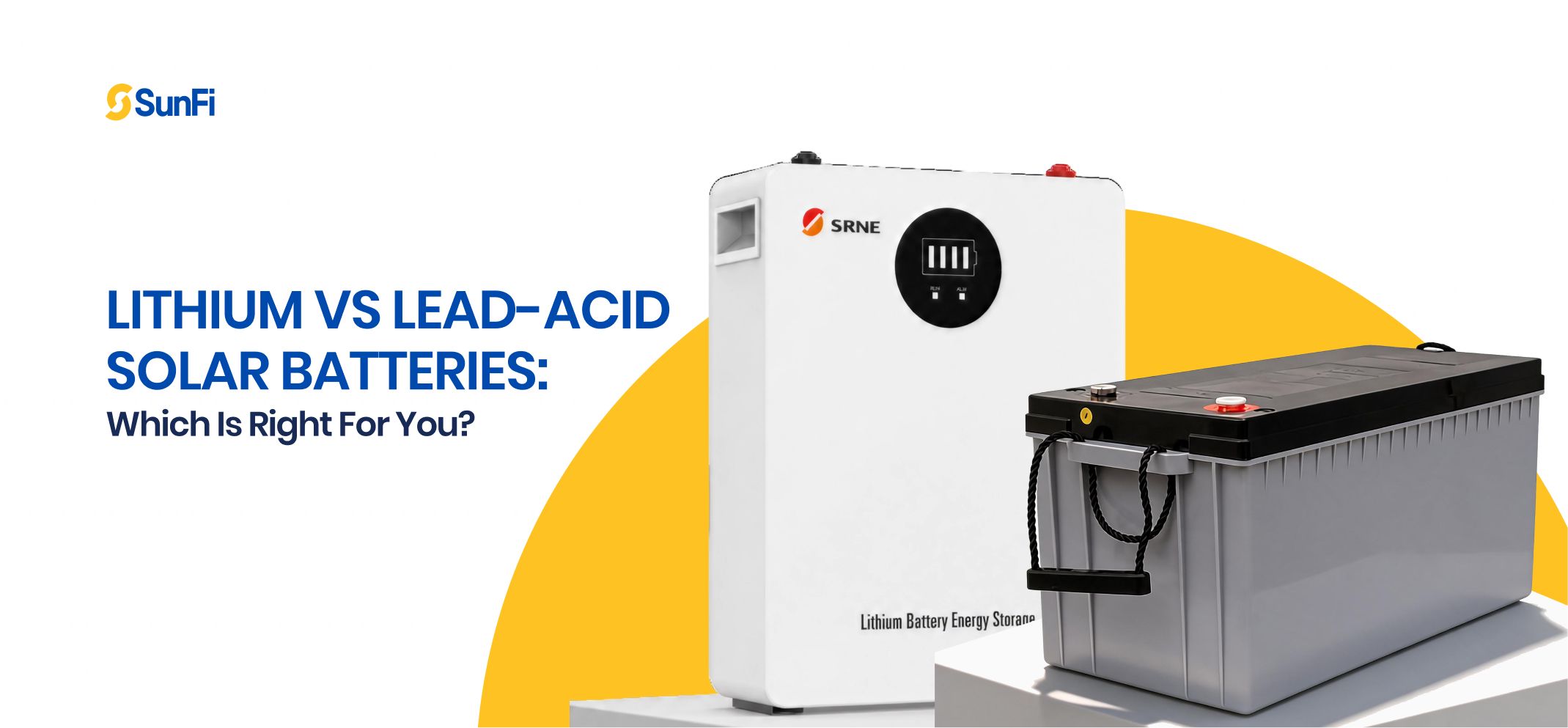
When you buy a solar system, most of your attention goes to the panels and inverter. But the battery is just as important. It determines how much stored power you have when the sun goes down, the grid goes off or your panels aren't producing enough electricity.
When it comes to solar batteries, you'll mostly be choosing between lithium and lead-acid. Knowing which one to choose between a lithium and a lead acid battery depends on lifespan, maintenance, usable capacity and upfront cost.
Here's a simple look at how they compare and which might be better for your home.
What Does a Solar Battery Actually Do?
Your solar panels generate electricity when the sun is shining. The battery stores some of that electricity so you can use it later at night, on cloudy days or when the grid goes off.
This makes the battery one of the most important parts of your solar system. A battery that's too small may run out quickly, while the right battery can keep your essential appliances running for much longer.
Put simply: your panels generate the power, but your battery stores it for when you need it.
If you're still working out how much solar power your home needs, our guide on how many solar panels your home needs is a good place to start.
Lead-Acid Batteries: The Lower-Cost Option
Lead-acid is an older, well-established battery technology and is generally cheaper to buy upfront. Solar-specific lead-acid batteries are designed to be charged and discharged repeatedly, unlike the starter batteries used in most cars.
The main advantage is the lower starting cost. If you're working with a tight budget, lead-acid can make it possible to get a solar system for less.
But there are trade-offs.
Lead-acid batteries typically have a shorter lifespan, often around 2–4 years, depending on the type, usage and maintenance. Flooded lead-acid batteries also require regular checks and topping up with distilled water, while sealed types such as AGM and gel require less maintenance.
You also can't safely use all the energy stored in a lead-acid battery without affecting its lifespan. This means you may need a larger battery to get the same usable power as a lithium battery.
Lithium Batteries: The Longer-Lasting Option
Lithium batteries are the newer and increasingly popular choice for solar energy storage, particularly lithium iron phosphate (LiFePO4) batteries.
They cost more upfront, but they offer several advantages.
A lithium battery can often last around 8–10+ years, depending on usage and operating conditions. It also generally allows you to use more of its stored energy without significantly affecting its lifespan.
Lithium batteries require very little routine maintenance compared with flooded lead-acid batteries. They're also lighter, more compact and can generally charge faster.
That's why the systems SunFi offers are built around lithium batteries. We partner with trusted manufacturers rather than producing the batteries ourselves. Our range includes compact options like the VSolaris V1200 portable power station and larger systems like the ColaSolar 3600 Plus.
The main downside is simple: the higher upfront cost.
Lithium vs Lead-Acid: What's the Difference?
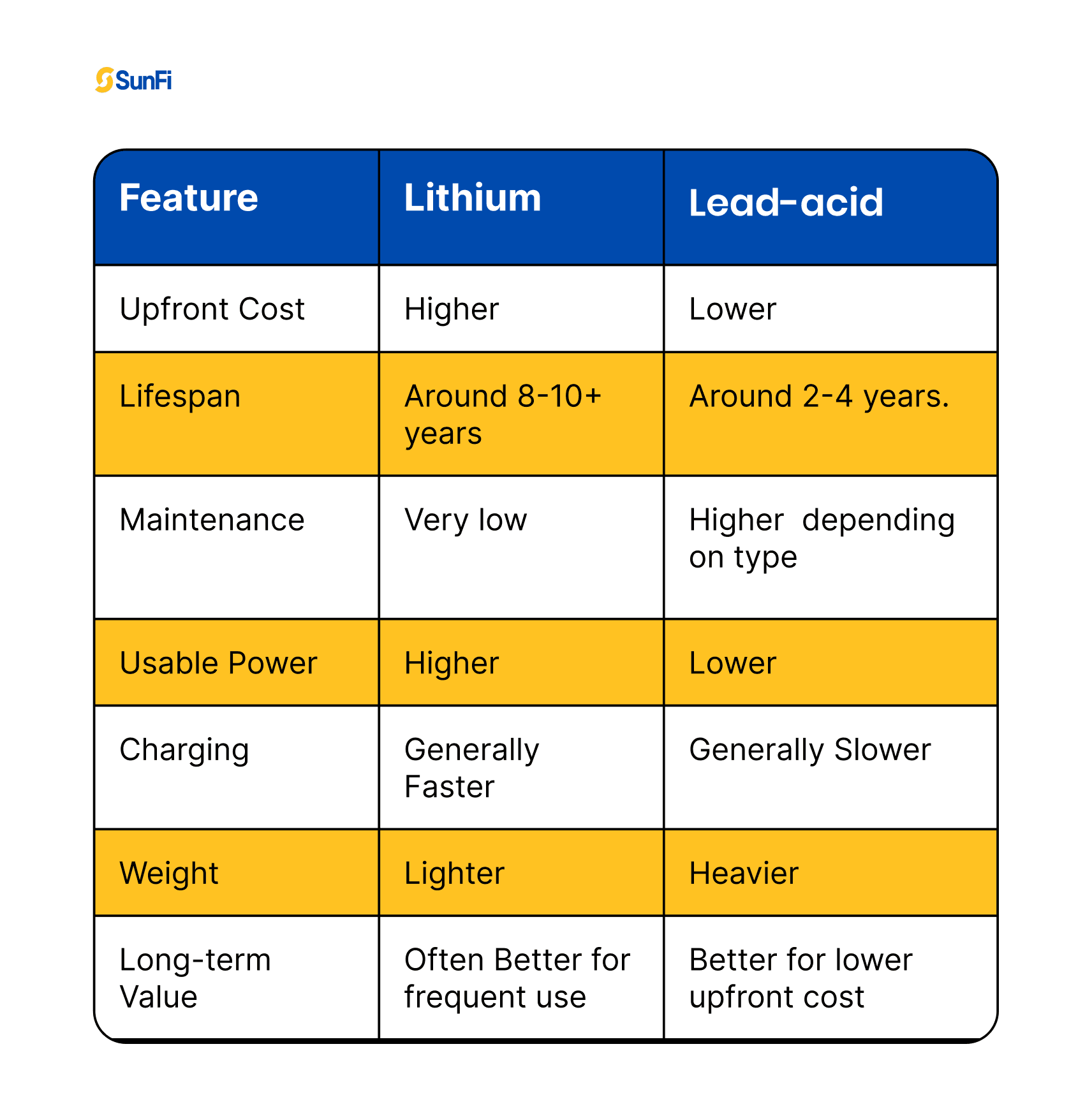
Actual lifespan and performance depend on the battery type, manufacturer, usage, depth of discharge and operating conditions.
So, Which Solar Battery Is Right for You?
It really comes down to your budget and how you plan to use your solar system.
Lead-acid might suit you if:
- You want the lowest possible upfront cost.
- You're using solar mainly as occasional backup.
- You don't mind more maintenance or replacing the battery sooner.
Lithium might suit you if:
- You rely on solar power every day.
- You want a battery that can last for many years.
- You want more usable power from your battery.
- You prefer a low-maintenance system.
- You're willing to pay more upfront for better long-term value.
For many Nigerian homes that rely heavily on solar because of frequent grid outages, lithium can make more sense over the long term. But there's no single right answer for everyone. Your energy consumption, budget, available space and how often you use your battery all matter.
The Simple Takeaway
When comparing lithium vs lead-acid solar batteries, don't look at the purchase price alone.
Lead-acid batteries are cheaper upfront, but they generally have shorter lifespans and require more maintenance. Lithium batteries cost more initially, but they typically last longer, provide more usable power and require less maintenance.
If you're planning to rely on solar every day, lithium is often the better long-term choice.
If you are not sure which battery is right for your home, explore SunFi's solar products. You can also chat with us on WhatsApp, or you can call 02018871099. We'll help you choose a system that fits how you actually use electricity.

Henry Adepegba
ABOUT AUTHOR
SEO Associate
Leave a Reply
Your email address will not be published.